Friday, June 5, 2020

Friday, May 29, 2020
This week at Maths we looked at how to find the area and the volume of 3d shapes. We first looked at nets that would form a cube. Then we tried to figure out the differences between volume, area and perimeter.
The volume of a cube
V= l x w x h
= n( tiny three/ cubed)
The Volume of a Triangular Prism
A= 1/2 x b x h V= n x l
= b x h = n(tiny 3/ cubed)
= n/2
= n( tiny 2/ squared)


The volume of a cube
V= l x w x h
= n( tiny three/ cubed)
The Volume of a Triangular Prism
A= 1/2 x b x h V= n x l
= b x h = n(tiny 3/ cubed)
= n/2
= n( tiny 2/ squared)
Tuesday, May 26, 2020
SS
Emigration is when a person exits a country
Immigration is when a person entering a place
Migration is moving to another place
Push factor means something that pushes people to move away from their country
Differences between secondary and primary resources
Primary resources are natural and secondary are processed
This Essay will be discussing why a Filipino family emigrated to New Zealand. The main reasons were:
A Filipino migrant moved from the Philippines moved to New Zealand to look for a job.
They moved to the Philippines because of the Pull and Push factors. They came to New Zealand in 2008 as a joke at their workplace where someone said: “Let’s go to the Middle Earth.” Once they came here they couldn’t forget the memories they had here. They thought that they would have more opportunities in here so they got a work visa which took 5 years.
They moved to New Zealand because of the opportunities they can get living here. They were born poor and a single parent with no education and money. They used to be a maths tutor, plantsadora and a service crew to support their son. In the Philippines, 109 m people live there while here in New Zealand there are only 5 m people that live here even tho they are almost the same length. When they decided to live here they thought the lifestyle here was very different from the Philippines.
They migrated here from the Philippines due to the chances they saw living here. There were lots of push and pull factors that pushed and pulled them to live here.
Friday, May 22, 2020
Maths
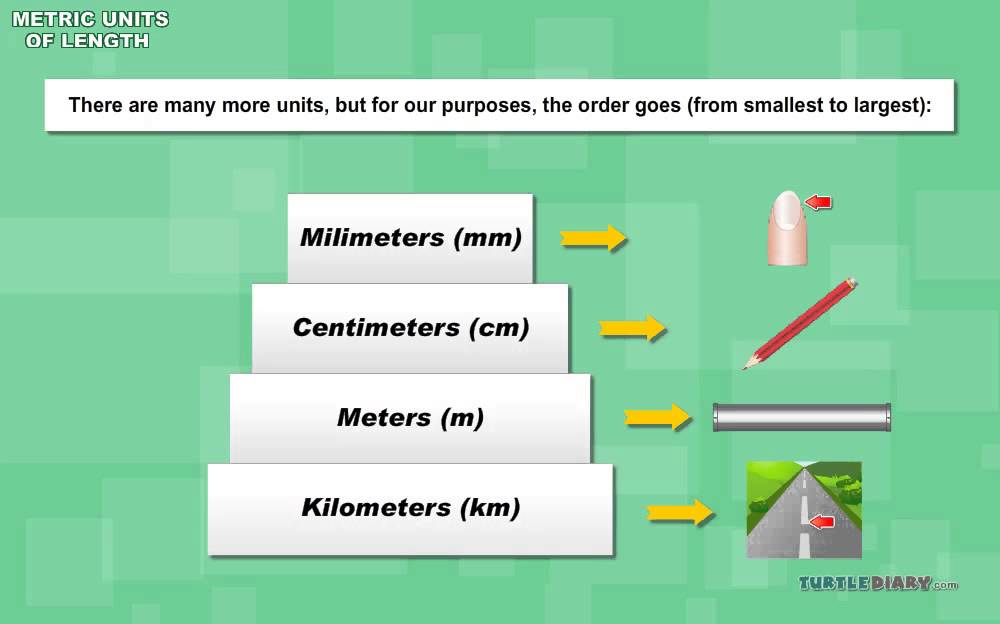
This week in Maths class we continued our work from when we were at home. We started on our measurement topic. Using the resources on the teacher's website we tried to convert mm to cm and vice versa. We also learnt some measurement units.
Thursday, April 30, 2020
Migration
In social studies, we are studying the topic of migration.
I was born in the Philippines in April 2017 with my home family. We moved here because my mum was offered a job here and thought it would be better for us if we settled here in New Zealand.
(Animation-ish that I drew myself :))
This is what emigrating, immigration and an immigrant looks like...
I was born in the Philippines in April 2017 with my home family. We moved here because my mum was offered a job here and thought it would be better for us if we settled here in New Zealand.
(Animation-ish that I drew myself :))
This is what emigrating, immigration and an immigrant looks like...
Tuesday, April 28, 2020
The hottest and coldest place on earth - a comparative study
Dallol, Ethiopia, is the hottest inhabited places on earth
Death Valley.
Antarctica, Vostok weather station
The village of Oymyakon in Russia’s Yakutia region is the coldest village in the world
---------------
The hottest and coldest place on Earth
What are the Hottest and Coldest places on Earth? In this essay, we will compare the Hottest place and the coolest places on the planet and figure out their similarities as well, as each continent and countries have different and similar temperatures.
With the average temperature of 35 degrees Celcius, The Dallol region of Ethiopia is the hottest place on the planet. Dallol volcano is in the Danakil Depression, depression meaning low altitude. It is said that water quickly evaporates and when walking around you’ll feel like you’re on another planet. There are lots of acidic pools and mineral salts pushed to the surface which caused the colourful surroundings. There are no people or any living organisms living in Dallol anymore. It is too hot to be inhabited however, there are still tourists and Afar people who live nearby to collect minerals. There are a few animals who can survive, for example, the camel. It can survive due to its flat feet, huge humps on their backs that contain water and their long lashes to protect their eyes from the sun.
A white snowy dessert filled with thick sheets of ice. No forests, no rivers or ponds, until you pass over the south geometric pole where you will see the Vostok weather station of Antarctica which is installed by the former Soviet Union in 1957 and is now managed by Russia. You would spot a bunch of buildings and equipment on the surface. The station supports 30 people but no human is able to permanently live in Antarctica but there are animals and plants that are able to. For example the Penguin. It can keep warm due to the layer of fat under the skin. Yes, penguins do have feathers which are good for keeping heat and energy but they’re not large, flat and arranged in an area like flying birds have. They are small and placed evenly packed all over the surface. Their flippers are used for communication with other penguins.
The Dallol dessert in Africa and The Vostok weather station has some similarities, Like; people can't really live in these places permanently, no trees, and water. But there are lots of differences as well. For example, the temperature is very different. It is freezing in Antarctica while in Africa it is burning hot.
Wednesday, March 18, 2020
Science: Medical Science

The Human Skeleton.
The Skeleton provides shape and support to our bodies. If we had no skeleton then we wouldn't be able to move and without it, our organs would squeeze, slip and slide onto each other.
There are 206 bones in a skeleton.
Cranium, which is also known as the skull. Its purpose is to protect the brain.
Mandible, also known as the jaw bone. It is the strongest bone and holds the bottom teeth in place
Clavicle, your collar bone
Scapula, the shoulder blade
Sternum, the breast bone
Humerus or funny bone is connected to the radius and ulna
Ribs, literally just called ribs. Its purpose is to protect the heart and the respiratory system
Pelvis, hip bone
Radius, forearm bone on the thumb side
Ulna, forearm one on the pinky side
Phalanges, bones of the fingers and toes
Femur, the thigh bone
Fibula,
Tibia, no
Muscles
The muscles function by making themselves shorter. This process is called Contraction
The Tendons attach the muscles and bones together. When the muscle contracts, it pulls the muscle. Muscles can only push not pull.
When your muscles aren't bending it is called Relaxing
Blood
The blood has a lot of functions. It carries oxygen from the lungs to your cells, carries carbon dioxide from your cells and lungs, carries hormones from the glands around your body, regulates the
temperature by regulating heat around your body, and carries the nutrients from your digestive system to your cells.
The blood is made out of 4 elements: platelets, plasma, red blood cell, white blood cell.
Respiration
Aerobic = Involves oxygen
Oxygen+Glucose > Carbon Dioxide+Water+ 38 ATP(energy)
Anaerobic = Does not involve oxygen
Glucose >>>Lactic acid + 2 ATP(energy)
Subscribe to:
Posts (Atom)