Pages

Showing posts with label Science. Show all posts

Monday, August 3, 2020

Circuit

What is a circuit?

A circuit is a path where electricity travels. There are two types of circuits: Series and Parallel circuit. 

A Series Circuit is where there is only one path for the current to flow whereas a parallel circuit is where the current can flow into different paths as shown in the image on the right.


What is Voltage? how does it differ in series vs parallel?

A voltage measures how much volt a current carries. In a series circuit, the volt is shared among the components while in a parallel circuit, the current has more branches to follow. It carries the same amount of volt and does not split.

(series)                                                     (parallel)

What is Current? How does it vary in series and parallel?

Current is the flow of electrons in a circuit. It is measured using a device called an ammeter and the unit of current is an amp. 

In a series circuit, the current is the same and isn't shared whereas in a parallel circuit the current is shared.


Wednesday, March 18, 2020

Science: Medical Science


Image result for skeleton

The Human Skeleton.

The Skeleton provides shape and support to our bodies. If we had no skeleton then we wouldn't be able to move and without it, our organs would squeeze, slip and slide onto each other.

 There are 206 bones in a skeleton.

 Cranium, which is also known as the skull. Its purpose is to protect the brain.

Mandible, also known as the jaw bone. It is the strongest bone and holds the bottom teeth in place

Clavicle, your collar bone

Scapula, the shoulder blade

Sternum, the breast bone

Humerus or funny bone is connected to the radius and ulna

Ribs, literally just called ribs. Its purpose is to protect the heart and the respiratory system

Pelvis, hip bone

Radius, forearm bone on the thumb side

Ulna, forearm one on the pinky side

Phalanges, bones of the fingers and toes

Femur, the thigh bone

Fibula,

Tibia, no

Muscles

The muscles function by making themselves shorter. This process is called Contraction

 The Tendons attach the muscles and bones together. When the muscle contracts, it pulls the muscle. Muscles can only push not pull.

 When your muscles aren't bending it is called Relaxing


Blood

The blood has a lot of functions. It carries oxygen from the lungs to your cells, carries carbon dioxide from your cells and lungs, carries hormones from the glands around your body, regulates the 
temperature by regulating heat around your body, and carries the nutrients from your digestive system to your cells.

The blood is made out of 4 elements: platelets, plasma, red blood cell, white blood cell.


Respiration

Aerobic = Involves oxygen
Oxygen+Glucose > Carbon Dioxide+Water+ 38 ATP(energy)
Anaerobic = Does not involve oxygen
Glucose >>>Lactic acid + 2 ATP(energy)


Friday, October 18, 2019

Observing the Effects of Acid Rain

Aim: To see the effects of acid rain to our environment.

Equipment:  Petri dish, Weigh boat, baby flower, calcium carbonate, universals indication, bromothymol blue, sodium sulfide and acid

Method:
1. Place the weigh boat in the middle of the Petri dish.
2. Moist the chunk of apple and baby flower petal with water then place them both in the Petri dish around the weigh boat. Add 1 scoop of calcium carbonate that is moist and Make sure they are all placed separately.
3. Do 3 drops of universals indication and 3 drops of bromothymol blue around the weigh boat and around the Petri dish. Keep them separate.
4.  In the weigh boat put a scoop of sodium sulfide. Drop water on it then stir.
5. Add 4 drops of acid in the weigh boat then quickly close it.

 Results:
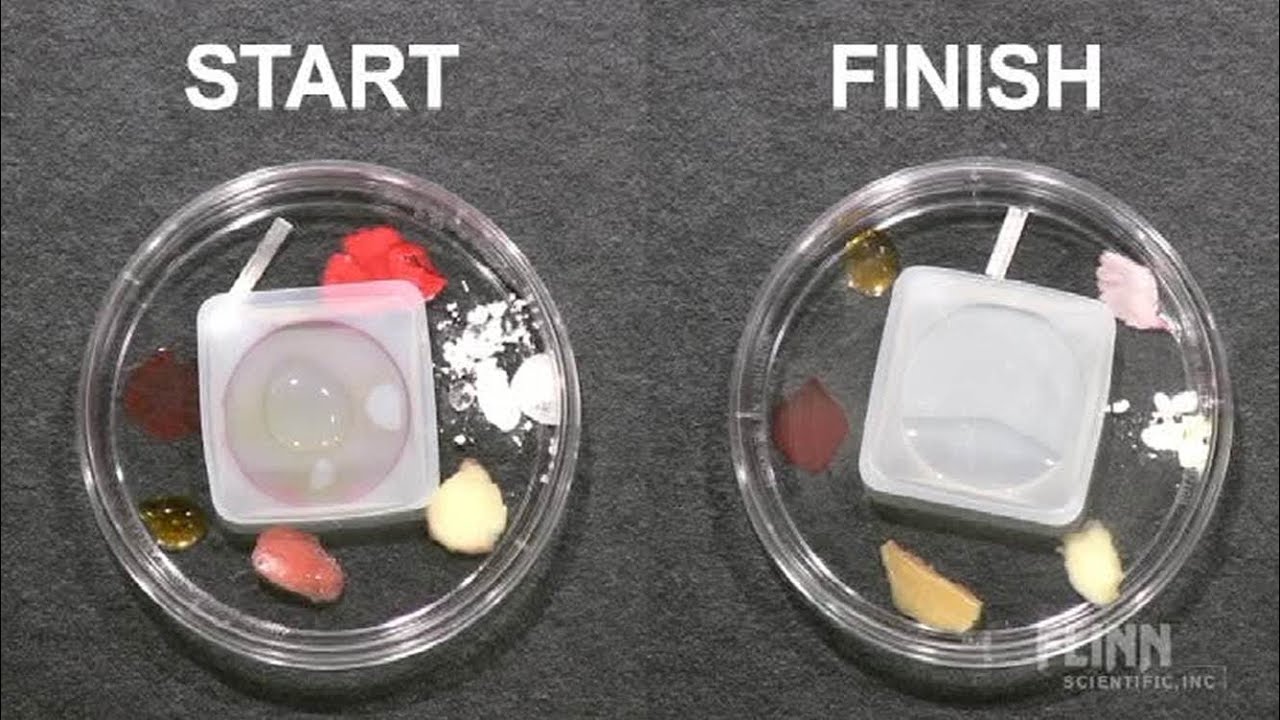
Image result for acid rain experiment

Observation: We saw how the universal indication, which was green at first and the bromothymol blue changed colour. The universal indication turned into a peachy like colour and the bromothymol blue turned green and yellow. We also noticed how the red baby flower petal started to turn a light pink colour though it was supposed to turn hard but we didn't have time. The apple turned a little bit dry and hard but due to not having much time it was still a bit moist. The moist calcium carbonate turned crusty. These all happened because of the effects of acid rain.

Explanation: Acid rain was formed when fossil fuels such as coal, oil and natural gas was burned. Sulfur dioxide and nitrogen oxides are released in the air and rise up the atmosphere. The molecules dissolve in the water in the clouds. Then the rainwater becomes more acidic.