Pages

Wednesday, March 18, 2020

Science: Medical Science


Image result for skeleton

The Human Skeleton.

The Skeleton provides shape and support to our bodies. If we had no skeleton then we wouldn't be able to move and without it, our organs would squeeze, slip and slide onto each other.

 There are 206 bones in a skeleton.

 Cranium, which is also known as the skull. Its purpose is to protect the brain.

Mandible, also known as the jaw bone. It is the strongest bone and holds the bottom teeth in place

Clavicle, your collar bone

Scapula, the shoulder blade

Sternum, the breast bone

Humerus or funny bone is connected to the radius and ulna

Ribs, literally just called ribs. Its purpose is to protect the heart and the respiratory system

Pelvis, hip bone

Radius, forearm bone on the thumb side

Ulna, forearm one on the pinky side

Phalanges, bones of the fingers and toes

Femur, the thigh bone

Fibula,

Tibia, no

Muscles

The muscles function by making themselves shorter. This process is called Contraction

 The Tendons attach the muscles and bones together. When the muscle contracts, it pulls the muscle. Muscles can only push not pull.

 When your muscles aren't bending it is called Relaxing


Blood

The blood has a lot of functions. It carries oxygen from the lungs to your cells, carries carbon dioxide from your cells and lungs, carries hormones from the glands around your body, regulates the 
temperature by regulating heat around your body, and carries the nutrients from your digestive system to your cells.

The blood is made out of 4 elements: platelets, plasma, red blood cell, white blood cell.


Respiration

Aerobic = Involves oxygen
Oxygen+Glucose > Carbon Dioxide+Water+ 38 ATP(energy)
Anaerobic = Does not involve oxygen
Glucose >>>Lactic acid + 2 ATP(energy)



Friday, March 13, 2020

Social studies


I researched about Children Soldiers in the Philippines and this slide shows what,who,when,how they are.

Friday, February 28, 2020

Maths

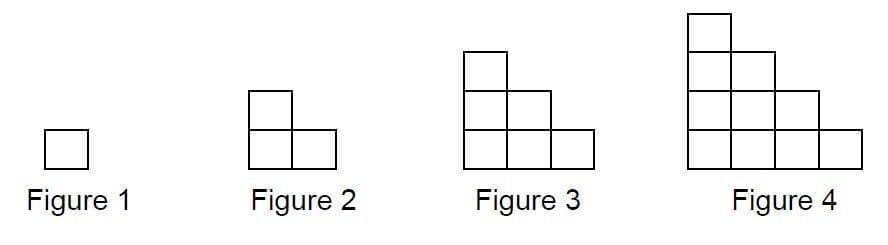
This week in Maths we looked at something I am not good at, Generalizing. We tried to 'solve the staircase problem'. There were four figures and we had to figure out what figure ten would look like and how many squares would there be. We also tried to find out how many squares did figure fifty-five have.

 Image result for staircase figure problem
Image result for crying nezuko gif

Tuesday, February 25, 2020

In Social Studies we are learning about the Slave trade in America. This is a research task about Harriet Tubman. She helped hundreds of enslaved people and gain freedom by escaping the underground railroad


Wednesday, February 12, 2020

Socail Studies human rigths

United Nations
Universal Declaration of Human Rights

1. We Are All Born Free & Equal.

2. Don’t Discriminate.

3. The Right to Life.

4. No Slavery.

5. No Torture.

6. You Have Rights No Matter Where You Go.

7. We’re All Equal Before the Law.


8. Your Human Rights Are Protected by Law.

9. No Unfair Detainment.

10. The Right to Trial.
11. We’re Always Innocent Till Proven Guilty.
12. The Right to Privacy.
13. Freedom to Move.
14. The Right to Seek a Safe Place to Live.
15. Right to a Nationality.

16. Marriage and Family.

17. The Right to Your Own Things.

18. Freedom of Thought.
19. Freedom of Expression.
20. The Right to Public Assembly.
21. The Right to Democracy.
22. Social Security.
23. Workers’ Rights.

24. The Right to Play.

25. Food and Shelter for All.

26. The Right to Education.

27. Copyright.
28. A Fair and Free World.
29. Responsibility.
30. No One Can Take Away Your Human Rights.

We are learning about Human Rights in Social Studies. Everything we've learnt so far is really interesting. I copy-pasted the simplified version of the 30 Human rights.

Wednesday, February 5, 2020

A recent news that interests me

 The 2020 Taal volcano eruption. The Taal volcano crater filled with the Taal lake in Luzon, Batangas Philippines. With 33 eruptions, it is the second most active volcano in the Philippines. It last erupted on the 12th of January 2020, 43 years from the last eruption in 1997.

 In the past few weeks of the first month of 2020 many people who lived around the area have evacuated from their homes to avoid the eruption. They didn't have even have enough time to pack their stuff and they had to stay in separate little tents connected with each other without roofs in a huge gymnasium. They all had to wear masks to not inhale in the ash fall. Though they try to cope with holding a contest of "Best Dressed up in 'Unsuitable' donated clothes at volcano evacuation centre" and off course praying.

 Most of the citizens who lived around the volcano are now evacuated. Every single one of their buildings has now collapsed and the whole place is covered in grey ash from the volcano. People lived around the volcano because of the rich land, fishing from the lake and the tourists that visit to make a living. It will take a while to rebuild the community.

 This disaster made me feel anxious and concerned because my family lives in the area close by where the Taal volcano erupted.

Bones


                                            What are the bones? The bones form the skeleton of the body. We have 206 bones in our bodies while babies have 300 bones.
 How does our body make them? The bones start off as cartilage. They are made from the same minerals as a tiger’s sharp claw. It is composed mainly of calcium phosphate and calcium carbonate. Muscles pull against the bones to make the body move.


How do they grow and repair? They grow with the help of calcium. The bones of a child’s bones fuse together to make the bones 206 adult bones.  How the bones heal themselves is that the body forms a blood clot around the fracture to protect it. Bone cells start to grow into both sides of the fracture. Then in closes it up.